Showing posts with label Weller. Show all posts

Monday, September 02, 2024

Something Wicked: Exaggerated Claims Resurface...


An article about the 1983 film Something Wicked This Way Comes is doing the rounds, and perpetuates the myth that Ray Bradbury directed the film. Regular readers of Bradburymedia and listeners to Bradbury 100 will know that this claim - originating with Ray Bradbury himself - is at best a wild exaggeration of the truth, and at worst an outright falsehood.

Something Wicked suffered at the hands of a preview audience, and producers at Disney decided it needed substantial re-shoots to make it work, delaying the release for about a year. Bradbury was involved in devising some new material to rescue the film, and late in life Ray's own recounting of these events gradually shifted with each re-telling from the plausible "I helped with the re-shoots and re-edit" to "I more or less directed the re-shoots" to the preposterous "I directed Something Wicked". (These are not exact quotes; I'm paraphrasing.)

The problem with the article at CBR.com is that it relies on a single account, that given by Sam Weller in 2005's The Bradbury Chronicles, who in turn merely repeats what Ray has told him.

Let's set the matter straight.

I thoroughly researched the making of Something Wicked for my 2017 PhD thesis, which examined Bradbury as a screenwriter. From primary research using the Bradbury papers (held at the Ray Bradbury Center at Indiana University Indianapolis), I was able to reconstruct the timeline of the re-shooting and re-editing of Something Wicked, and I determined that Bradbury's claim to have directed the film is false.

True, Bradbury was present during some of the re-shooting - but so was the film's credited director Jack Clayton. However, true artistic control over the film during this re-shoot phase was vested in neither Bradbury nor Clayton, but in the Disney special effects department (with Lee Dyer supervising on set, and Tom Wilhite overseeing production).

I have written and lectured extensively on this topic. You can find a brief account on this very website, here: https://bradburymedia.blogspot.com/2020/05/lockdown-choice-something-wicked-this.html

You will also find my detailed podcast episode on the "re-making" of Something Wicked here: https://podcasts.apple.com/ie/podcast/bradbury-100-episode-45-rescuing-something-wicked-this/id1521151939?i=1000613486403

Finally, the full account of my findings can be found in chapter 4 of my Liverpool University PhD thesis, available here (third download link): https://livrepository.liverpool.ac.uk/3009310/

Friday, June 25, 2021

Bradbury's "Witch" Ancestor

It seems to be quite well known that Ray Bradbury's ancestry can be traced to back to Mary Perkins Bradbury, who was charged with witchcraft at Salem in 1692. Sam Weller's biography of Ray, The Bradbury Chronicles, gives a couple of pages to this, and it's referred to elsewhere. But did Ray know about this ancestry, and did he ever write about Mary?

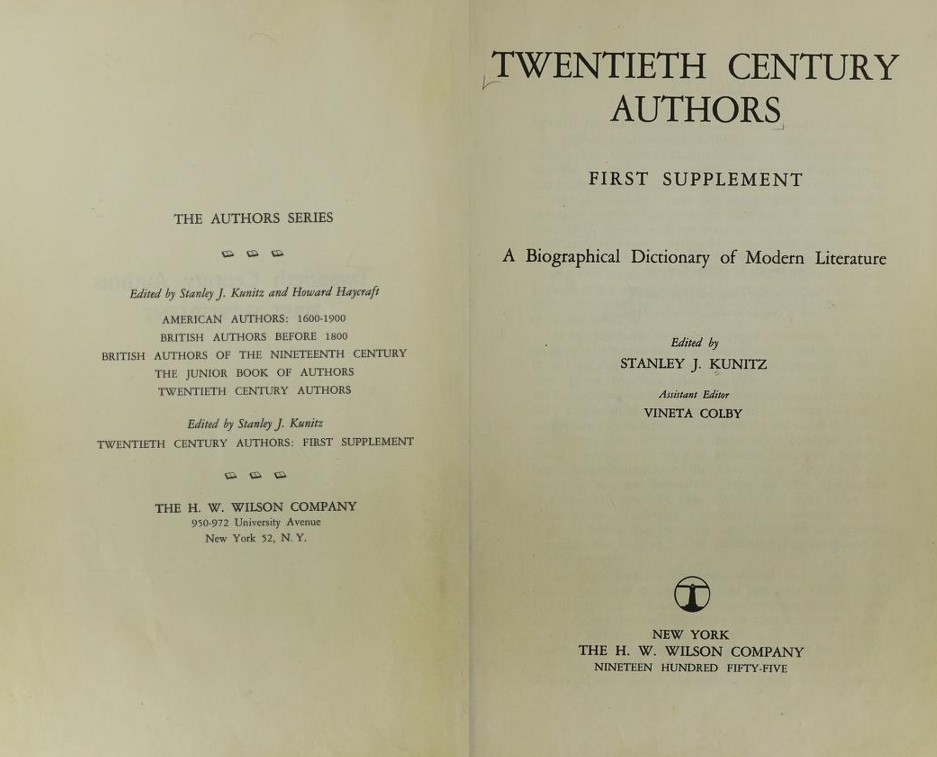
The answer to both questions is a definite yes. In 1955, Stanley J. Kunitz published a first revision to Twentieth Centry Authors, and it includes an article on Bradbury written by Ray himself. This was Bradbury at the peak of his early fame as a writer. He had several books out, including his masterwork Fahrenheit 451 (1953), was writing for television, and had completed his arduous stint as the screenwriter of Moby Dick (which would be released in 1956). At the time of the article, he would have been grappling with his manuscript for Dandelion Wine (which would be published in 1957), while also working on a script treatment for Gene Kelly - The Dark Carnival, which would eventually emerge as the novel Something Wicked This Way Comes (1962).

The short article - you can see the whole thing below - refers to Bradbury's belief that writers shouldn't slant their work to a particular market, but should write freely and let the work find an an appropriate outlet. It also refers to his belief that science fiction and fantasy "offer the liveliest, freshest approaches" to the problems of the modern world.

And it refers to Mary Perkins Bradbury, to whom Bradbury attributes his belief in "freedom from fear [...] and thought control".

...for which we should, I suppose, say, "Thank you, Mary Perkins Bradbury."

(And my thanks to Hugh, whose question about Mary prompted me to write this post!)

You can find out more about Bradbury's ancestry in this (very old) blog post of mine


If you click on these images, they should embiggen.


Friday, April 24, 2020

Best Reference Sources

If you've been following my Lockdown series of posts, you'll know that I like to give background information on Ray's books: how they came to be written and edited. And you might be wondering where I get my information from. Well, here are the answers...

Actually, most of it is in my head, and I simply type it out - and then go fact-checking to make sure I haven't made any mistakes. But how did it get in my head in the first place? I have a number of go-to books, and these are where I have learned most about Bradbury over the years.

The first of these is the magnificent Ray Bradbury: the Life of Fiction, written by the masterful Bradbury scholars Jon Eller and the late Bill Touponce. It's really two books in one, reflecting the authorship of the book, and the specialisms of Jon and Bill. They go through each of Ray's major works and give you (a) a history of how the book was originally composed, including roads-not-travelled; and (b) a lit.-crit. analysis of each of those works. The history sections are generally the work of Jon Eller, and the lit.-crit. sections are generally by Bill Touponce - although the two did help each other with the revisions of their respective sections.


The reason I find this book so fascinating is that it really uncovers Bradbury's writing process. It's a process of writing, re-writing, and more re-writing. And this is precisely why Bradbury's books tend to be a bit fluid over time, with (for example) various editions of The Martian Chronicles having slightly different contents. And why you will often see the same idea popping up in different works over many years.

My own original research into Bradbury has usually focused on Ray's writing and re-writing in media (film scripts, plays, radio plays etc), and it was amazing to find that Eller & Touponce had uncovered similar quirks in Bradbury's prose fiction as I was finding in his screenwriting. Over the last decade or so, I've had the good fortune of working quite closely with Jon Eller, and there's no doubt that his understanding of Bradbury has rubbed off on me. We both have a fascination with archive materials, and how we can re-construct a sequence of events from a set of archival clues. I was also lucky enough to meet and work with Bill Touponce on a couple of projects, but his approach and mine are very different. Although I admire Bill's analytical and theory-infused writing, it's a form and style that I would struggle to achieve (and usually seek to avoid) in my own writing.

My second go-to book is the profusely illustrated Ray Bradbury: an Illustrated Life by the late Jerry Weist. This is a glorious coffee-table book full of cover art and interior art from nearly all of Ray's career. But it also includes draft artwork, both from the cover artists (especially Joe Mugnaini) and from Ray himself. I'll bet you didn't know that many of Ray's book covers were from Ray's own concepts.


Third is Sam Weller's authorised biography of Ray, The Bradbury Chronicles. It's quite well researched and written in a breezy style. You'll be amazed how quickly Ray's long life flies by as you work through this volume. My only real problem with it as a reference book is that the index is quite inaccurate. Many a time I've looked something up in the index and found that the page references are wrong. I'm not sure what went wrong here. (The ebook version has an obvious advantage, in that you can ignore the index and just do a straight text search.) There are also a couple of instances where Weller reports something that Ray has told him, but hasn't done the follow-up fact-checking that I would expect in a book which generally appears to be well-researched. The case of "the Lonely One" is a particular example which I have discussed before.


Finally, not a book but a whole series of books. Starting with Becoming Ray Bradbury, Jon Eller has produced a trilogy of biographical volumes about Ray and his work. It's sometimes been referred to as a biography of a mind, since it focuses on Ray's developing intellect throughout his career. And since Eller is a meticulous researcher (and the series is published by an academic press), everything is thoroughly referenced and cross-referenced. The third volume, Bradbury Beyond Apollo, is due out later this year, and it traces Ray's evolution through the "space age" and beyond. You'll get to find out how Ray went from being something of an outsider to the science-fiction field to being a spokesman for the genre - and a lauded consultant on anything to do with space and planetary research.


What you won't find a book on is Bradbury's media work - and that's precisely why this Bradburymedia website exists. It was always my aim to focus on this much un-researched area of Ray's activities. So if you're wondering where I get all my film, radio and television-related information from, the answer is: my own research. I've had to dig into archives and find primary sources to track Ray's development as a screenwriter. And I've had a lot of fun doing it!

Tuesday, January 13, 2015

Soft Rains

It's been the oddest of weeks.

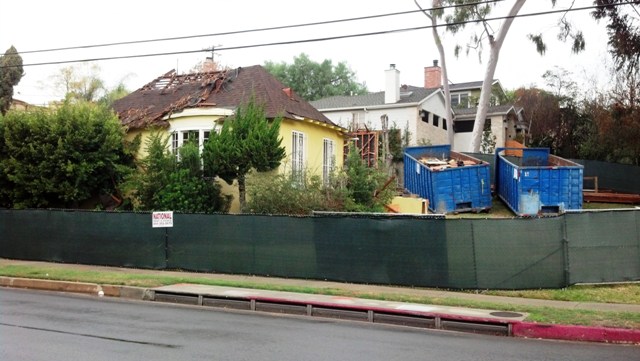
Ray Bradbury's former house, located on Cheviot Drive in Los Angeles, has been recreated along with Ray in a graphic treatment of a Bradburyesque fiction - and in real life has been pulled down.

Ray passed away in 2012, and in 2014 his house was finally put up for sale. It was bought by an architect who, apparently, has the intention of using the land for building a new family home. It was only a matter of time before the Bradbury house, a curious yellow bungalow built into a hillside, would be redeveloped. I don't think anyone close to Bradbury was quite prepared for how devastating this would seem.

Ray and his family moved into the house over fifty years ago, and countless newpaper interviews, magazine profiles, news reports and documentary films have shown the house, so much so that the house and Bradbury became synonymous. His basement office, overloaded with books, toys and exotic masks, was for many years a particular focus of published profiles of Ray; and in the last years of his life, it was his "den" that became the focus, where he would entertain visitors surrounded by sculptures of dinosaurs, an Ice-Cream Suit, Halloween paraphernalia and original artworks.

In 2014, not only was the house sold off, but many of Ray's possessions also went up for auction. And this week, the demolition team moved in. There are pictures of the remains of the house in this report on Mike Glyer's File770 website, accompanying an article written by Ray's longtime friend and helper John King Tarpinian.

By coincidence, this week also saw the publication of the third issue of Shadow Show, the comic book based on the Bradbury tribute book of the same name. Issue 3 includes a graphic adaptation of Bradbury biographer Sam Weller's short story "Live Forever!" - a story which includes Ray as a character, and uses the house as the arena in which this Bradburyesque tale unfolds. Sam tells me that the comic's producers went to great lengths to achieve accuracy in depicting the house. The result is very successful. Here's one page from the comic, and you can see more in this preview.


Note that even the artworks hanging on the walls are reproduced with accuracy in Mark Sexton's comic strip - in the page above, the final frame shows the classic cover art for Bradbury's The Illustrated Man.

It is a great irony that these two events should have coincided: the celebration of Bradbury's house as one source of his literary strength, and the destruction of that same house. Friends of Bradbury who were present around the time of the demolition have reported a further irony. The day they knocked the roof off the Bradbury house, it rained. Not exactly a common occurrence in Los Angeles. Inevitably, it brings to mind Bradbury's classic short story "There Will Come Soft Rains", which poignantly depicts an empty house after a nuclear war:


The house shuddered, oak bone on bone, its bared skeleton cringing from the heat, its wire, its nerves revealed as if a surgeon had torn the skin off to let the red veins and capillaries quiver in the scalded air. [...]

The crash. The attic smashing into kitchen and parlor. The parlor into cellar, cellar into sub-cellar. Deep freeze, armchair, film tapes, circuits, beds, and all like skeletons thrown in a cluttered mound deep under.[...]

Dawn showed faintly in the east. Among the ruins, one wall stood alone. Within the wall, a last voice said, over and over again and again, even as the sun rose to shine upon the heaped rubble and steam:

"Today is August 5, 2026, today is August 5, 2026, today is . . ."


Saturday, September 13, 2014

Bradbury "Ice Cream Suit" Event in California

If you are near Pomona, California, in mid-October, here's a unique event: a screening of The Wonderful Ice Cream Suit, with a panel on the making of the film. It's to support Pomona Public Library.

The film was scripted by Ray Bradbury, based on his short story and play, and was directed for Disney by Stuart Gordon - a director better known for his work in the horror genre. Gordon will be on the discussion panel, along with two of the film's stars: Joe Mantegna and Edward James Olmos.

And if that weren't enough, the panel will be joined by Bradbury's authorised biographer Sam Weller, and chaired by organiser of Los Angeles' Ray Bradbury Week, Steven Paul Leiva.

Full details of the 12th October event are here.

Sunday, August 17, 2014

Comic-Book Series: Ray Bradbury Tribute SHADOW SHOW

Comics publisher IDW has announced a five-issue series of comic books based on the Shadow Show anthology.

The original anthology, edited by Mort Castle and Ray Bradbury's biographer Sam Weller, was created as a tribute to Bradbury, and included stories from leading fantasists such as Neil Gaiman and Harlan Ellison.

The new comic will adapt a selection of the anthology's stories, including those by Gaiman, Ellison, Joe Hill and Alice Hoffman.

Full details are on IDW's web page, here.

Tuesday, November 27, 2012

Ray Bradbury Square


The dedication of Ray Bradbury Square has been confirmed for Thursday 6th December at 2pm, and a list of speakers has been published.

Ray Bradbury Square is in Los Angeles, located at the intersection of Fifth St and Flower St. This very urban crossroads doesn't look like the sort of place Bradbury would identify with, but to one side of the  intersection is a small park adjacent to the Los Angeles Public Library. It is in this park that the dedicatory sign will be mounted... and now it all begins to make sense, since Bradbury is strongly identified with libraries.

The speakers at the dedication ceremony will include the actor Joe Mantegna, whose credits include the Bradbury-scripted The Wonderful Ice Cream Suit. Others of note include the City's Librarian, John Szabo; the SF writer David Brin; Bradbury's daughter Sue Bradbury Nixon; Bradbury's biographer Sam Weller; and the co-ordinator of Ray Bradbury Week 2010, Steven Paul Leiva.

The event is open to the public. For more information, click on the flyer below.

Flyer - click to embiggen


Wednesday, October 10, 2012

Ray's Last Composition?

According to his biographer Sam Weller, the last thing Ray Bradbury wrote for publication prior to his death was "The Book and the Butterfly" It's a short essay written as the introduction to The Best Nonrequired Reading 2012. How does Sam know this? Simple: Ray dictated it to him in April and they worked on the revisions in May, shortly before Ray passed away.

"The Book and the Butterfly" has been reproduced online by the Huffington Post, and can be read here.


Thursday, April 19, 2012

Bradbury news

Sam Weller, Bradbury's biographer, was quoted recently as saying that Bradbury is the most important writer of the last one hundred years. I'm not going to argue with that. Full details can be found in this report from the Lake County News-Sun, the newspaper that serves Waukegan, Illinois and the surrounding areas.

- - - - - - -

There's been a video of a 2001 Bradbury lecture on YouTube for a very long time, but just lately I've seen dozens of new places linking to it - as if it were a new lecture or a new find.  I'm not going to re-link to it directly, but I will link to two web pages which have condensed some of Bradbury's content. Here you will find, derived from the lecture, Bradbury's twelve pieces of advice to young writers. And here, Bradbury's recommended reading. I confess to having read just a few of the authors he mentions (Collier, Welty and Wharton, since you asked).

- - - - - - -  

From Monsters from the Vault magazine, a bit of free reading: Terry Pace's article entitled "Ray Bradbury's Earliest Influences" discusses Bradbury's early childhood experiences watching Lon Chaney.

- - - - - - -


Monday, April 16, 2012

Searching for Bradbury's "The Crowd"

Although Ray Bradbury is a fantasist, occasionally you hear of one of his works of fiction being inspired by real-life events. One classic example is the short story "The Crowd", which deals with a ghoulish, apparently supernatural crowd of people who gather at car crashes.


The story is supposedly inspired by an incident Bradbury witnessed in Los Angeles in his teens. Bradbury's biographer Sam Weller, writing in The Bradbury Chronicles, describes it like this:


[...] in 1935 Ray was visiting Eddie Barrera at his house on Washington Boulevard when they heard a terrific crash outside. The boys bounded out the front door and saw a smoldering car about a hundred yards up the street, in front of a cemetery. The car had hit a telephone pole head-on and the passengers had been catapulted onto the pavement. [...] Three people had already died; another - a woman - was barely alive.


It was the sight of this woman that created a vivid memory that compelled Bradbury to think about the event over and over until, some eight years later, he was inspired to produce "The Crowd", which was first published in Weird Tales in May 1943. Today, you can find the story in The Stories of Ray Bradbury.

In The Complete Stories of Ray Bradbury: a Critical Edition, Jon Eller gives a little bit more information: that Bradbury was  located at Washington Boulevard [Eller says Avenue, but there is no Washington Avenue in LA] and Berendo Street. Armed with this information, and Google Maps, this allows us to work out where the crash must have taken place: outside Rosedale Cemetary. The nearest part of the cemetery is about a hundred yards from the corner of Berendo and Washington.


View Larger Map


I thought I would try to locate detailed information about this car crash. Such an incident must surely have made the local press, I thought.

Searching through the online archives of the Los Angeles Times for 1935, I found just one news story that contained details of a car crash and a reference to Berendo/Washington, reported on 1 May 1935.

Unfortunately, none of the content ties in with Bradbury's recollection. The headline, "AUTOS TAKE TWO LIVES", gave me hope that this was indeed the account of the source of "The Crowd". But alas this one brief news story tells of two separate road traffic accidents happening the day before, both being incidents where pedestrians were hit by cars... and reports a conviction for manslaughter due to dangerous driving in another incident... and reports on a police officer being struck by a motorcycle and sidecar... and reports on a court appearance by a man arrested for drunk driving... and on and on.

I was forgetting. This is Los Angeles. The home of the road traffic accident, even in 1935.

No wonder Bradbury was always afraid to drive, and became a champion of public transport!

Tuesday, April 03, 2012

Shadow Show

Mort Castle, co-editor of the forthcoming Bradbury tribute volume, recently posted some more information about Shadow Show: All New Stories in Celebration of Ray Bradbury:

Editor Sam Weller and I (and Ray!) are pleased with what people are saying about Shadow Show: All New Stories in Celebration of Ray Bradbury. The book will be released July 17 in the William Morrow edition and around that time in the Gauntlet Press/Borderlands editions.

"Great new tales of imagination in the Bradbury tradition." -- Hugh Hefner

“There is no more fitting tribute to my friend Ray Bradbury than a compilation of wonderful short stories!  Ray is a champion of libraries and one of America’s most inventive teller of tales.   I cherish many happy times engrossed in his stories.  This anthology reflects the high imagination, visionary ideas, and fantastic writing that Ray is loved and known for around the world.”--Laura Bush

"Ray Bradbury is without a doubt, one of this, or any century's greatest and most imaginative writers.  SHADOW SHOW, a book of truly great stories, is the perfect tribute to America's master storyteller." --Stan Lee

"SHADOW SHOW is a treasure-trove for Ray Bradbury enthusiasts as for all readers who are drawn to richly imaginative, deftly plotted, startlingly original and unsettling short fiction.  No one who knows their darkly fantastic fiction would be surprised to see such renowned names here as Ramsey Campbell, Harlan Ellison, Margaret Atwood, Neil Gaiman, Audrey Niffenegger, and Kelly Link; but it is something of a surprise to see Dave Eggers, Jacquelyn Mitchard, Dan Chaon, Bonnie Jo Campbell, and Julia Keller  in this gathering, all of them Ray Bradbury admirers, and all so gifted.  The tributes to Ray Bradbury that follow each of the stories are particularly interesting, often heartwarming and inspiring." --Joyce Carol Oates


The information appeared on the Shocklines message board.


Sunday, July 24, 2011

Becoming Ray Bradbury

If you have a shelf full of Ray Bradbury's books, you may think you know his work well. You'd be wrong.

Professor Jonathan Eller of Indiana University has made it the work of a decade or so to pull off Bradbury's mask and find what's beneath. Some of this work has been done in studies of single works by Bradbury. Eller has edited, co-edited or contributed to volumes such as It Came From Outer Space, Moby Dick: a Screenplay, and The Halloween Tree. These have all revealed previously invisible aspects of Bradbury's work, by publishing intermediate aftefacts such as screen treatments, outlines and screenplays.

In his work with his Indiana colleague Prof William Touponce, Eller has substantially overturned our assumed wisdom about Bradbury's authorship. Their mammoth study Ray Bradbury: the Life of Fiction presented new readings of Bradbury's major works in light of archaeological diggings into Bradbury's typescripts and working papers. Before Eller and Touponce, we tended to assume that each book Bradbury put out was a reflection of his writing at the time of publication. After The Life of Fiction we can see that the vast majority of Bradbury's work stems from an extensive outpouring of creativity in the 1940s and early 1950s.

Eller and Touponce are continuing to "set the record straight" through their ongoing multi-volume critical edition of The Collected Stories of Ray Bradbury. This series of books seeks to restore Bradbury's original texts and to establish the original compositional sequence and chronology of Bradbury's short stories. It's really quite stunning to discover how many of Bradbury's classic tales were conceived or written before 1950.

Now Eller has completed a volume which serves as an excellent companion to The Life of Fiction and The Collected Stories.

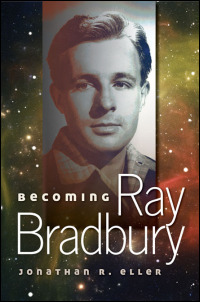
Becoming Ray Bradbury is a biography of Bradbury's early career, concentrating on his creative, literary and intellectual development. It goes up to the key turning point of Bradbury's professional life: his sojourn in Ireland working on Moby Dick for John Huston. The remainder of Bradbury's career is due to be covered in a sequel volume.

There have been Bradbury biographies before, of course, most notably Sam Weller's The Bradbury Chronicles. Why do we we need another?

The answer to that one is simple. Sam Weller writes about every facet of Bradbury. Not just Bradbury the writer, but Bradbury the young film fan who hung around studio gates waiting for an autograph from W.C.Fields. Bradbury the celebrity who walked out on David Frost on the night of the Moon landing. Bradbury the friend of the stars and honoree of presidents from around the globe. All of this makes The Bradbury Chronicles a rounded and fascinating read.

But what Eller does in Becoming Ray Bradbury is carefully examine the details of Bradbury's writerly development. Here we learn of exactly what Bradbury was reading and writing during his early attempts to become a writer; of the importance of mentors such as Jack Williamson, Edmond Hamilton and Leigh Brackett; of his encounters with the works of Steinbeck and Hemingway. Some of this is covered in Weller's book, but Jon Eller takes us deeply into Bradbury's reading and can tell us that, for example, in 1944 Bradbury read Charles Jackson's The Lost Weekend and E.B. White's One Man's Meat. In many cases, he is able to tell us how and why Bradbury came to each volume: perhaps a chance discovery in a bookshop; perhaps a recommendation from friend Henry Kuttner; perhaps a gift from his wife.

Why does any of this matter? Well, because Eller is trying to piece together factors that influenced Bradbury's writing, thinking and worldview. It is clear in the early chapters that Bradbury was quite susceptible to influence from others, as we discover through the account of Bradbury's aligning himself with the "Technocracy" movement. It is equally clear that the young Bradbury was astute in making up his own mind, and having explored an idea in depth would be quite prepared to toss it aside if it was found wanting.

Becoming Ray Bradbury is particularly good in covering Bradbury's early professional years, presumably in part because Bradbury himself kept good records. (He has a reputation, to this day, of never throwing anything away.) It also gives an excellent account of Bradbury's oscillation between optimism and pessimism in terms of his knowledge and understanding of the world. Many critics are confused over this, and find it hard to reconcile a perceived "anti-science" bias in some of Bradbury's work with a profound optimism found elsewhere.

At the heart of Becoming Ray Bradbury is a pair of chapters dealing with Bradbury's "miracle year", a twelve-month period in which he submitted three of his major works: The Martian Chronicles, The Illustrated Man and "The Fireman" (the earliest published version of Fahrenheit 451.)

You can probably tell by now that I think highly of this book, but that doesn't mean I find it without its flaws and foibles, although they are really quite minor. Although it is far more detailed than The Bradbury Chronicles, it doesn't attempt to cover every aspect of Bradbury's life. For some readers - particularly those who haven't read The Bradbury Chronicles - that might make this seem an oddly-balanced volume. In fact, the book is probably best seen as complementary to The Bradbury Chronicles. I still think it will make perfect sense to anyone who hasn't read Weller.

The only other slight weakness emerges from the difficulty of trying to draw out themes from a literary career while still sticking to a broadly chronological telling of events. There are occasions where the narrative has to backtrack, and with a work as detailed as this it's easy for the reader (me, at least) to have forgotten a crucial detail from a previous chapter.

The book is very clearly written. Don't be put off that this is written by a professor, and is published by a university press. It is free of scholarly jargon and doesn't demand that you have a degree in Eng. Lit.

Becoming Ray Bradbury is a fine companion to The Life of Fiction and The Collected Stories of Ray Bradbury. Together, they round out a significant re-evaluation of Bradbury's life and work.

Saturday, January 22, 2011

RIP: Jerry Weist

I never met Jerry Weist, but he was one of the most important chroniclers of the work of Ray Bradbury. His classic book celebrating the visual art of Bradbury, Ray Bradbury: an Illustrated Life, helped establish a real sense of the evolution of Bradbury's work over the decades. Before Jerry's book, we just knew Bradbury as a novelist and short story writer, and knew he had dabbled with films, theatre and poetry. But mostly we knew only Bradbury's books. For instance, "The Fog Horn" was just a short story that belonged in Golden Apples of the Sun, and the cryptic copyright notice at the bottom of the page merely tantalised us with some indication that the story had another life.

After Jerry's book, though, we all knew that "The Fog Horn" had an origin in a 1950s magazine. We could see how the original readers of that story were given the story with an entirely different context, a double-page colour spread that explicitly represented the "monster" that Bradbury's considered prose had thoroughly humanised and presented as not really monstrous at all.

After Jerry's book, we could see how Bradbury's work had attracted marvellous illustrators even from the days of the pulps, and how certain key artists like Hannes Bok and Joe Mugnaini had been inspired again and again by Bradbury's words - and how he, in turn, had been inspired by their creative take on his own stories.

The first time I saw An Illustrated Life, I saw it as a coffee-table book. A charming collection of mostly retro images that managed to capture the spirit of the old days of horror, fantasy and SF. It undoubtedly influenced what I decided to do with my own website, and even provided some images that I could find nowhere else. Now, though, I think of An Illustrated Life as one of three books that has changed our view of Bradbury's authorship:

  • Weller's Bradbury Chronicles gives us the life story, filling in the little-told aspects of Bradbury's life
  • Weist's An Illustrated Life gives us a picture of the changing context of of Bradbury's work, and given the extensive interplay of film, TV, theatre and illustration in his work, the picture is incredibly valuable
  • Eller and Touponce's The Life of Fiction painstakingly examines the evolution of Bradbury's texts, speeling out in detail how Bradbury's work so easily spills over from one medium to another, as he constantly re-authors his ideas across media
I'm sorry to say that I only knew Jerry Weist through that one book, but there was a lot more to the man. Perhaps the best obituary is from Gloucester Times. Many thanks to jkt for bringing this to my attention.

Sunday, December 19, 2010

Connections, Foreword, Echoes

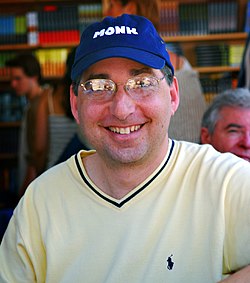
One of the blogs I look at regularly is Lee Goldberg's A Writer's Life. Goldberg is the successful writer and TV producer, perhaps best known for his Monk series, but with credits as long as both your arms.

His mother, who died earlier this year, was Jan Curran. Curran was also a writer, a journalist who worked as a society editor for The Desert Sun and Palm Springs Life.

In a recent post, Goldberg presented some scans of his mom's photos, showing her with various celebrities she had encountered. Which brings us to the Bradbury connection.


I just spotted a new(ish) book with a new foreword by Ray Bradbury. Bound to Last from DaCapo press sees 25 (or 30, depending on whether you believe the blurb or the photo of the book's cover...) writers discussing the books that mean the most to them. Details are here.


Sam Weller, Bradbury's official biographer and author of Listen to the Echoes: The Ray Bradbury Interviews has revitalised his blog of late as a kind of festive treat. Recent posts have included appreciations of key Bradbury short stories and - most interesting of all - a number of interesting items from the archives. If you haven't visited lately, it's well worth the trip: click here.

Saturday, July 24, 2010

FM returns, Weller speaks

Famous Monsters of Filmland, once a famous magazine about, er, films...is returning. And the forthcoming issue features two doses of Ray Bradbury.

First is an interview, and second is a new short story, "Niblick". I have no idea what it's about, but it wouldn't be the first time that golf has featured in a Bradbury short. Read more about the resurrection of this undead magazine here!


More from Sam Weller. I promised myself not to post links to any more Listen to the Echoespublicity, simply because most of the reporting I've seen on the subject has been repetitive and derivative. However, here's something a little different: Weller interviewed on camera at Newcity Lit.

Wednesday, July 21, 2010

F451

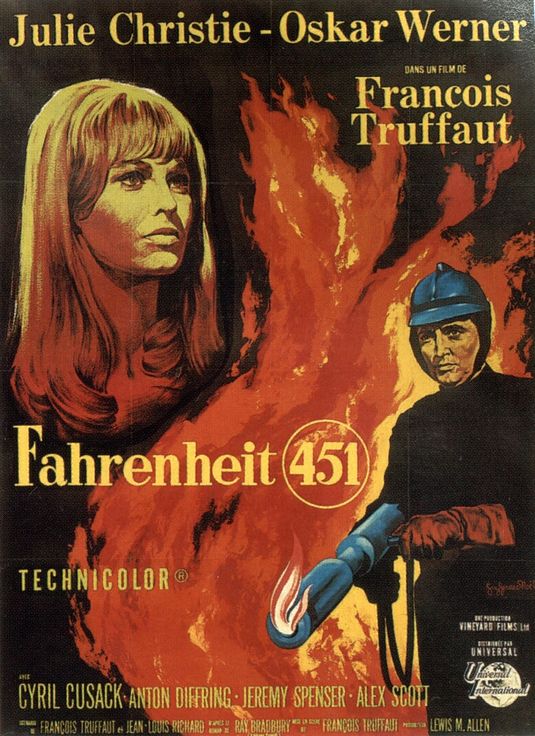
Critic Jonathan Rosenbaum has posted a brief note on his response to a recent re-viewing of Truffaut's film version of Fahrenheit 451. He notes in particular that Truffaut seems to be reflecting the Nazi occupation of France in the film, and cites a couple of scenes that support this idea.

It's an observation I have seen elsewhere, and is one that I have been considering in my own current study of the film. When you add this to some of the other pecularities of the film - the awkwardness of Truffaut working in a language (English) which he barefly spoke; the British studio practices which must have been so different to his experience of film-making in France; Truffaut's decision to style the film in opposition to the James Bond films - it's no wonder that the film seems so odd, and in some ways at odds with Bradbury's novel.

Rosenbaum viewed the film as part of a tie-in event for Listen to the Echoes. He apparently conversed with Bradbury and Sam Weller via Skype after the film.

Monday, July 12, 2010

Listening to those echoes

I've spent a few days reading Sam Weller's Listen to the Echoes, his collection of Bradbury interviews, and companion to his earlier biography The Bradbury Chronicles.

I quite like the book, although I don't think I have really learned anything new from it. That's not to criticise the book, as I'm sure many Bradbury readers will find something new here. It's just that when you've read Steven Aggelis' Conversations with Ray Bradbury and Bradbury's own Bradbury Speaks, it all becomes a little familiar.

I quite like one of Bradbury's phrases which crops up now and again throughout the book, which is something like "get your work done". It seems to be his response to all sorts of questions to do with coping with what life throws at you, and yet Bradbury claims not to be a workaholic. Indeed, his description of a typical day's work would support his non-workaholic claim. However, he just must be under-emphasising how much effort he would put into re-working his stories, as all the manuscripts I've seen show a lot of careful and considered deletions and edits.

What I didn't like about Listen to the Echoes is the endless catalogue of famous people Ray has known. If the famous people are worth discussing, I would have liked to see them discussed at length, not just used as a trivial throwaway.

But what I did like about the book is the breadth of its coverage. Bradbury isn't just asked about celebrity friends, or his own work, or his daily life; he is also asked about literature, poetry, painting, music, pop culture and high art.

Echoes is a useful sourcebook for anyone looking for quotable quotes from Bradbury, and has a good index. You just have to bear in mind that these are the views of an 89-year-old looking backwards. Anyone interested in a rounded view of how Bradbury sees the world would be well advised to also read Aggelis' Conversations with Ray Bradbury, which compiles interviews conducted over many decades of Bradbury's life and career.

Sam Weller is maintaining a blog to tie in with the book, which has recently included this essay by Bradbury on the death of a feline friend.

Tuesday, July 06, 2010

Weller, Black Francis

The Listen to the Echoes publicity machine rumbles onward! Sam Weller's book of Bradbury interviews is out, and picking up some positive reviews. Sam recently appeared on Chicago radio station WGN to talk to Bob Sirott about the book, Bradbury, David Bowie, Ringo Starr and Rod Serling. You can listen to the eleven minute interview here.

WGN's website also has this review of the book.

Sam also writes about the origin of the book in this article from Time Out.

Listen to the Echoes carries an introduction by Black Francis of The Pixies. He talks about his Bradbury connection in this interview.

Thursday, July 01, 2010

Launch parties with Ray and Ray

Last week saw the launch of Sam Weller's book of Bradbury interviews, Listen to the Echoes. The event at the Mystery and Imagination bookstore in California attracted quite a bit of media attention. The LA Times reports on it here. Weller blogs about it here.

And if that's not enough, watch a video clip of the introductions on YouTube, here.


Further to my earlier post about Ray Harryhausen's 90th birthday, Harryhausen has opened an exhibition of his work in London at the London Film Museum. Fellow blogger Brian Sibley was there at the launch and has posted his account of the event, complete with photos of Mr H's mythic creations - such as this familiar Bradburyan Beast:


If you are wondering where you have seen this chap before, visit my page on The Beast From 20,000 Fathoms!

Thursday, June 24, 2010

Pandemonium, Echoes, F451

According to this article, Ray Bradbury's Pandemonium Theatre Company has stopped running. Although the company has been playing to packed houses, it sounds as if ticket sales were not enough to keep the shows going. We can only hope that this is a temporary state of affairs, as there is no doubt that having his own theatre company has enabled Bradbury to do some unique work.


Meanwhile, reviews are beginning to appear for Sam Weller's forthcoming book Listen to the Echoes. This is a collection of transcribed interviews, originally conducted when Weller was researching for his authorised biography of Bradbury. One such review is this one from the Chicago Tribune. The publisher's page for the book is here, and Weller's new blog is here. (I wonder if he knows that the 'comments' feature of the blog is broken...)


File under "how did I miss that?": Tor.com has been serializing Tim Hamilton's graphic novel version of Fahrenheit 451. Click these links to see each part:

Part 1
Part 2
Part 3
Part 4
Part 5